Churn and retention you can explain
A churn rate is only worth something if everybody in the room means the same by it. sumwerk shows five retention numbers for every month and prints, next to each, what it divides by what.
Start free Free during early access. Read-only Stripe key, hosted in Germany.
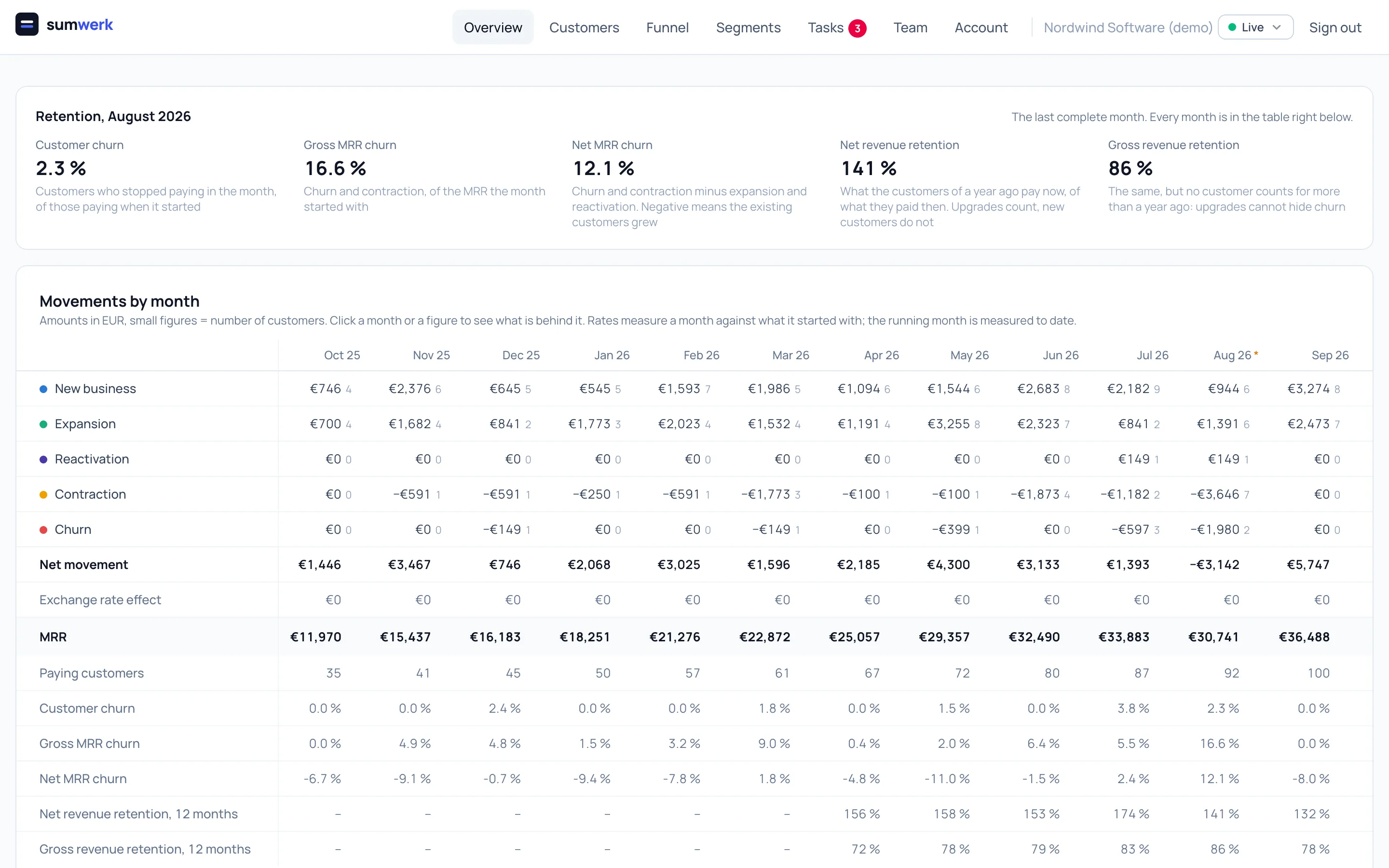
Three monthly rates, measured against what the month started with
Customer churn is the customers who stopped paying in the month, of those who paid when it began. Gross MRR churn is what churn and contraction took away, of the MRR the month started with. Net MRR churn subtracts expansion and reactivation from that, so a negative number means your existing customers grew by themselves.
Net and gross revenue retention follow last year's customers
Net revenue retention takes the customers who paid twelve months ago and asks what they pay today, of what they paid then. Upgrades count, new customers never do. Gross revenue retention is the same, but no customer counts for more than a year ago, so a few large upgrades cannot hide that others left.
The last complete month up front, every month in the table
The running month is still moving, so the overview leads with the last complete one and marks the running month as measured to date. The same rates are rows of the months table, in the API, in the CSV export and available to your AI assistant.
By plan, owner or any attribute
Who churns is usually more useful than how many. Segments show the churn of the last twelve months per plan, billing interval, owner, tag or any attribute you send, and every row opens the customers behind it.
Questions
- Why is my churn rate different from another tool's?
- Almost always because of the denominator, or because a plan switch was booked there as a churn and a new customer. sumwerk nets a switch into one expansion or contraction, and says on the page what each rate divides by.
- What about several currencies?
- Both sides of revenue retention are converted at the European Central Bank's rate of their own month end, so a large exchange-rate move shows in NRR. The monthly rates use each movement's own day.
Goes well with
- MRR you can provesumwerk computes MRR from the state of each Stripe subscription, not from prorated invoices, and links every movement to the Stripe invoice or event behind it.
- Segments and plansPaying customers, MRR, churn and trial conversion per plan, billing interval, owner, tag or any attribute you send. Every row opens its customers.
- MRR at risksumwerk flags revenue that still counts but is in doubt - failed and overdue payments, scheduled cancellations - by severity, without changing your MRR.
Connect Stripe and check your own numbers
A restricted, read-only key is all it takes. The first import runs in a few minutes; every number you see opens into the customers and Stripe references behind it.