One record per customer, whatever your billing looks like
A company that signs up twice, moves from euros to dollars or starts as a booked call is still one customer. sumwerk keeps it as one, and its revenue history with it.
Start free Free during early access. Read-only Stripe key, hosted in Germany.
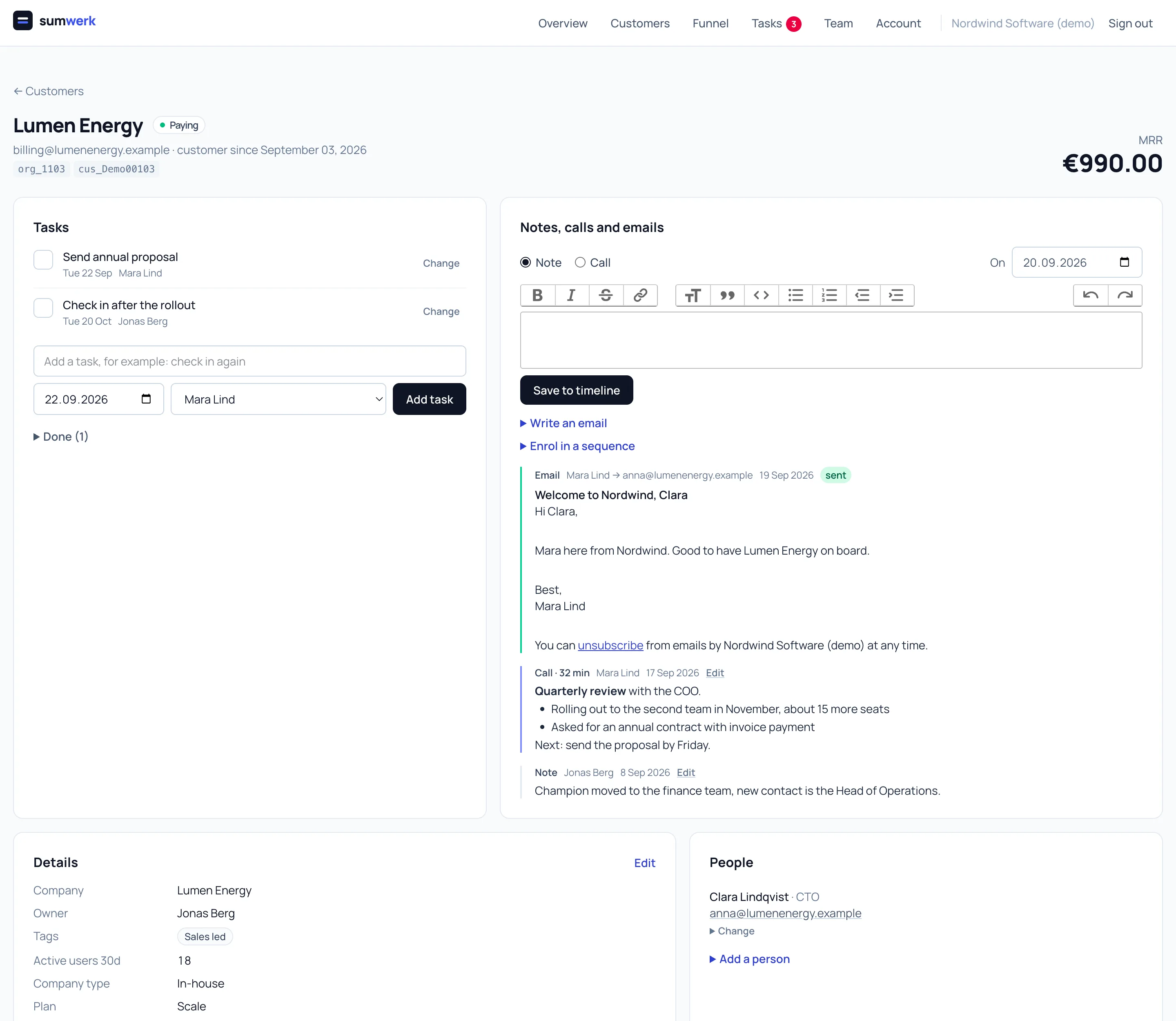
Customers that are not in Stripe yet
Trials often live in your product, not in Stripe. Send them through the API with your own id and their trial dates, and they show up as leads and trials. When the first payment arrives they become paying customers, on the same record.
Several ids, several Stripe customers, one customer
A lead that started under an email address and the organisation that followed are joined by naming both ids. Two Stripe customers that are really one company are linked with a reason - moved to another currency, subscribed again, duplicate sign-up - and their MRR nets together: a handover is not a churn and a new customer.
Your data next to the revenue
Owner, tags, custom attributes such as seats or product usage, and the people you talk to. Everything can be written through the API, so your product keeps it current. The plan and the billing interval come from Stripe by themselves, under plan names of your own, so old products and their monthly and yearly twins become one plan.
Cut the customer base by any of it: paying customers, MRR, churn of the last twelve months and trial conversion per plan, per owner, per tag or per attribute. Every row opens the customers behind it, and every row can become an at-risk rule.
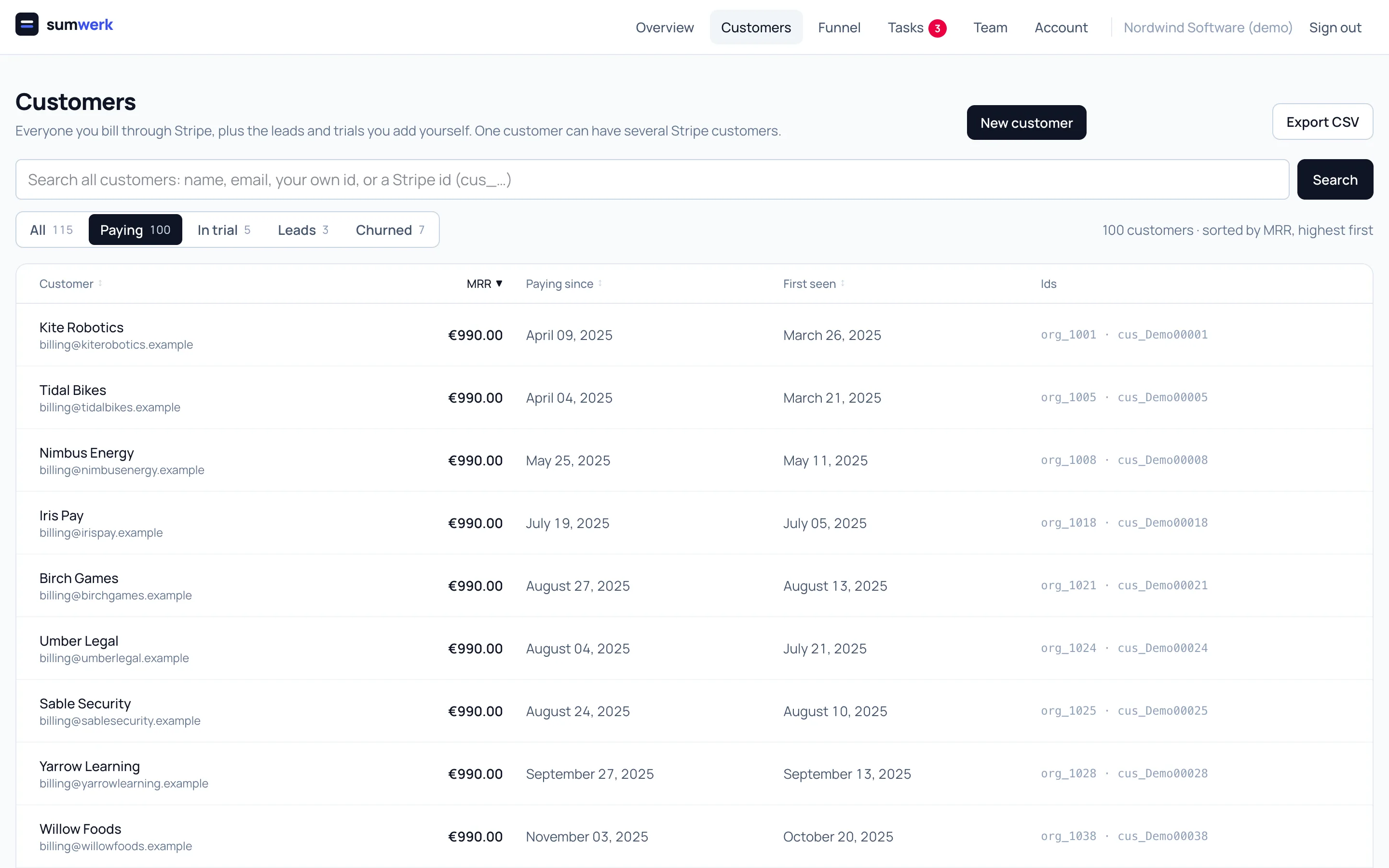
Nothing is merged behind your back
Same email address on two records is a suggestion, not a decision. A merge changes who counts as new and who as churned, so a person confirms it, and the reason stays visible.
Questions
- What decides a customer's status?
- It is derived, never set by hand - paying with MRR, churned after it, trial inside the trial dates, lead otherwise.
- Can I bring my existing customer data?
- Yes, through the API, or with the import from ChartMogul.
Goes well with
- Tasks and notesWrite notes, log calls with their length and keep tasks per customer in sumwerk - with the MRR, the ledger and the payment risk on the same page.
- Import from ChartMogulImport your ChartMogul CRM data into sumwerk: customers with all ids, tags, owners and attributes, contacts, notes, call logs and tasks.
- APIPull MRR, movements and customers out of sumwerk, push leads, trials, product usage, notes and tasks in, manage automations and receive signed webhooks.
Connect Stripe and check your own numbers
A restricted, read-only key is all it takes. The first import runs in a few minutes; every number you see opens into the customers and Stripe references behind it.